
I love Mediterranean flavors, with their freshness and complexity. Honey and Olive Oil Frozen Yogurt might be the most simple, concentrated distillation of Mediterranean flavors that I can cram into a frozen dessert. Honey is fundamental to many desserts around the Mediterranean, and obviously olive oil is a staple. I think olive oil is too often overlooked in desserts — it pairs beautifully with lots of sweet things, which is why I’ve used it in several ice cream recipes (see links below). The combination of rich, sweet honey with buttery, grassy olive oil, plus tangy yogurt is straightforward, yet unusual. So delicious.
A few notes on the ingredients
- Coconut milk: The base begins with coconut milk because its richness and mild flavor is perfect for non-dairy/reduced-dairy/lactose-friendly ice cream.
- Greek yogurt: You need plain, unflavored, unsweetened Greek yogurt. You can use anything from fat free to full fat, as long as it’s Greek style. (Regular yogurts will be too watery.) For extra Mediterranean flavor, replace Greek yogurt with labaneh (or labneh), an extra-thick yogurt with a more sour, cheesy taste.
- Whey protein: I typically add protein powder to my recipes to increase protein and reduce sugar. (More on how that works here.) This recipes calls for unflavored, unsweetened whey protein powder. Whey contains dairy protein, but not lactose, so it’s safe if you’re lactose intolerant. See the notes below the recipe for other protein powder options.
- Honey: Pretty self-explanatory. Yum!
- Olive oil: Try to use a pretty good one, since it will be providing a good amount of flavor. If you’d be happy to dip bread in it, that’s good.
Lactose friendly
Although this recipe contains dairy, it’s designed to be friendly for lactose-intolerant folks like myself. Neither of the two dairy-based ingredients should present a problem. First, the active cultures in the yogurt process the lactose, so yogurt is usually okay for lactose-intolerant people. (However, proceed at your own risk! Your results may differ!) Second, whey protein already has the lactose removed, so it’s definitely safe.
If you like Mediterranean flavors in your ice cream, check out these other recipes:
- Olive Oil, Maple, and Orange Marmalade Ice Cream (lactose free)
- Olive Oil, Honey, and Coriander Ice Cream (lactose free with a vegan option)
- Lemon, Rosemary, and Olive Oil Ice Cream (dairy free)
- Apricot-Pine Nut Ice Cream (vegan)
- Pomegranate Ice Cream (dairy free)
- Fig and Anise Ice Cream (lactose free)


Ingredients
Instructions
-
BLEND
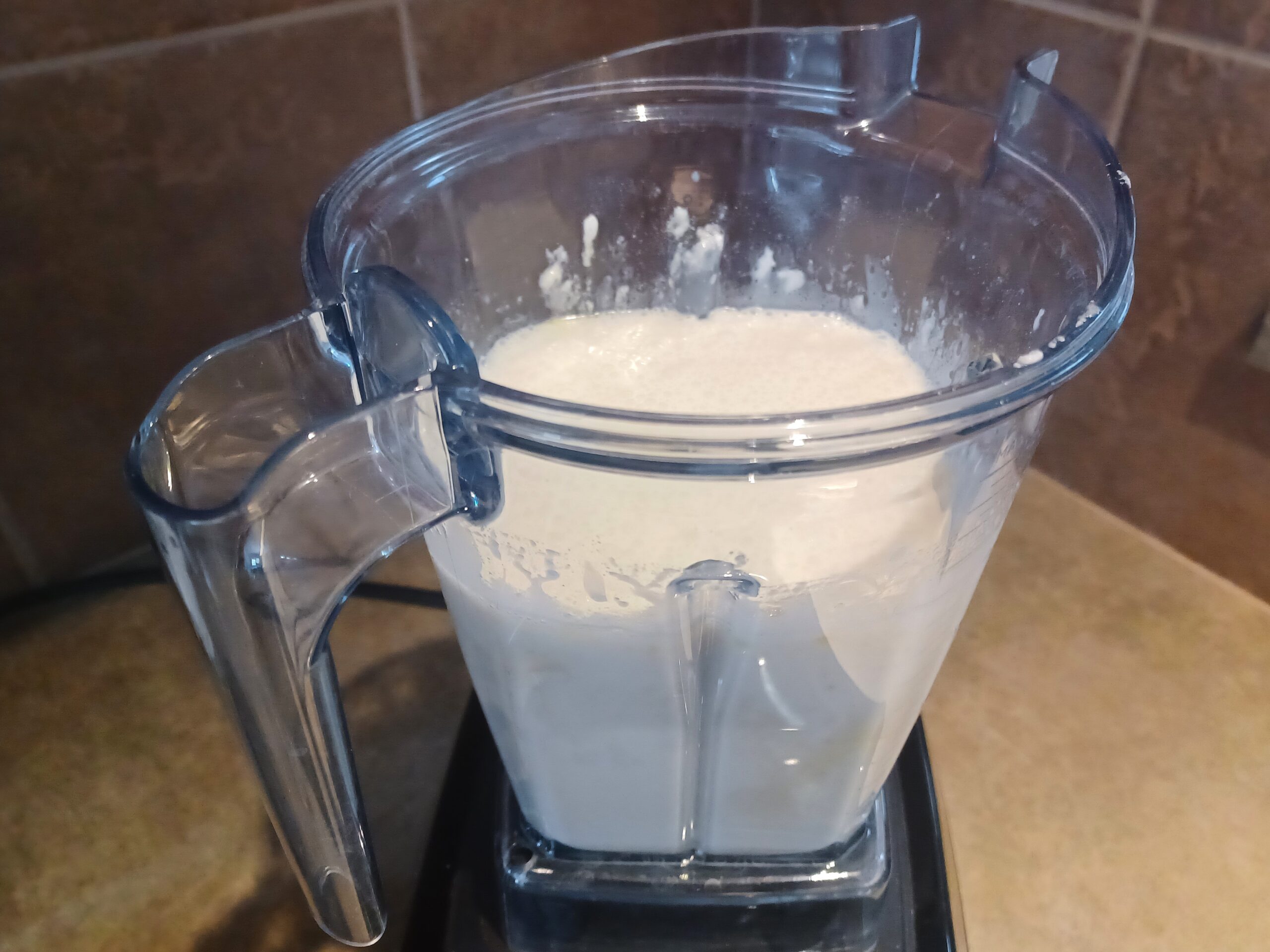
Add all ingredients to a blender and blend thoroughly, scraping down the sides with a spatula, until fully combined and smooth.
-
CHILL
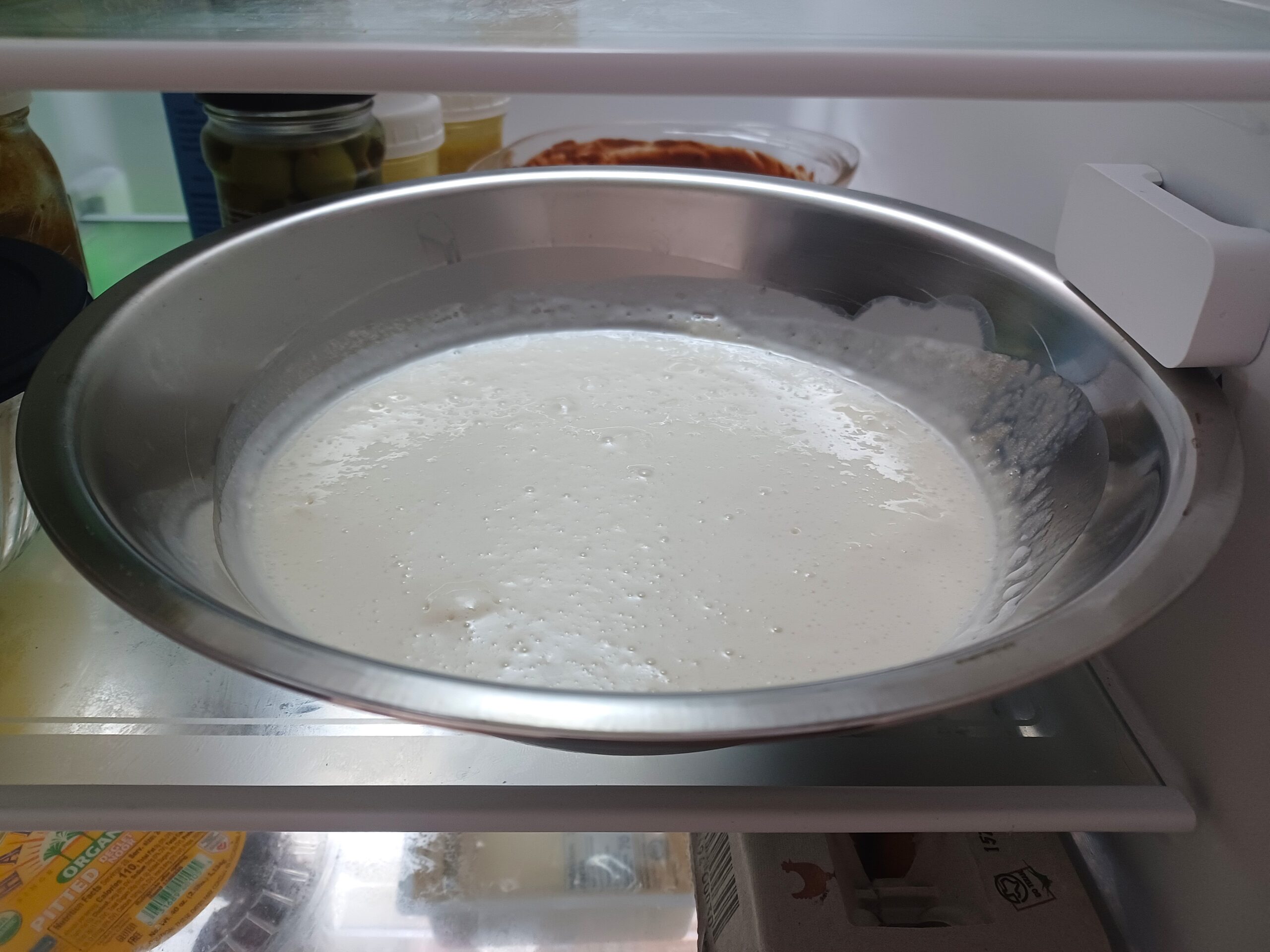
Transfer to a container and chill in the refrigerator for 8 hours or overnight.
For a quicker chilling time, place the bowl containing your mixture in an ice bath (a larger bowl containing ice water) for a few hours. Stir the mixture occasionally. As the water in the ice bath warms up, pour off some water and add ice to keep the mixture chilling as quickly as possible.
Ideally, the mixture will be about 40 degrees when you churn it.
-
CHURN
Before you start churning, set up everything you'll need to quickly transfer the frozen yogurt from the machine into a container for freezing. I use a knife to scrape down the dasher (or paddle) and a wooden spoon to scoop out the frozen yogurt.
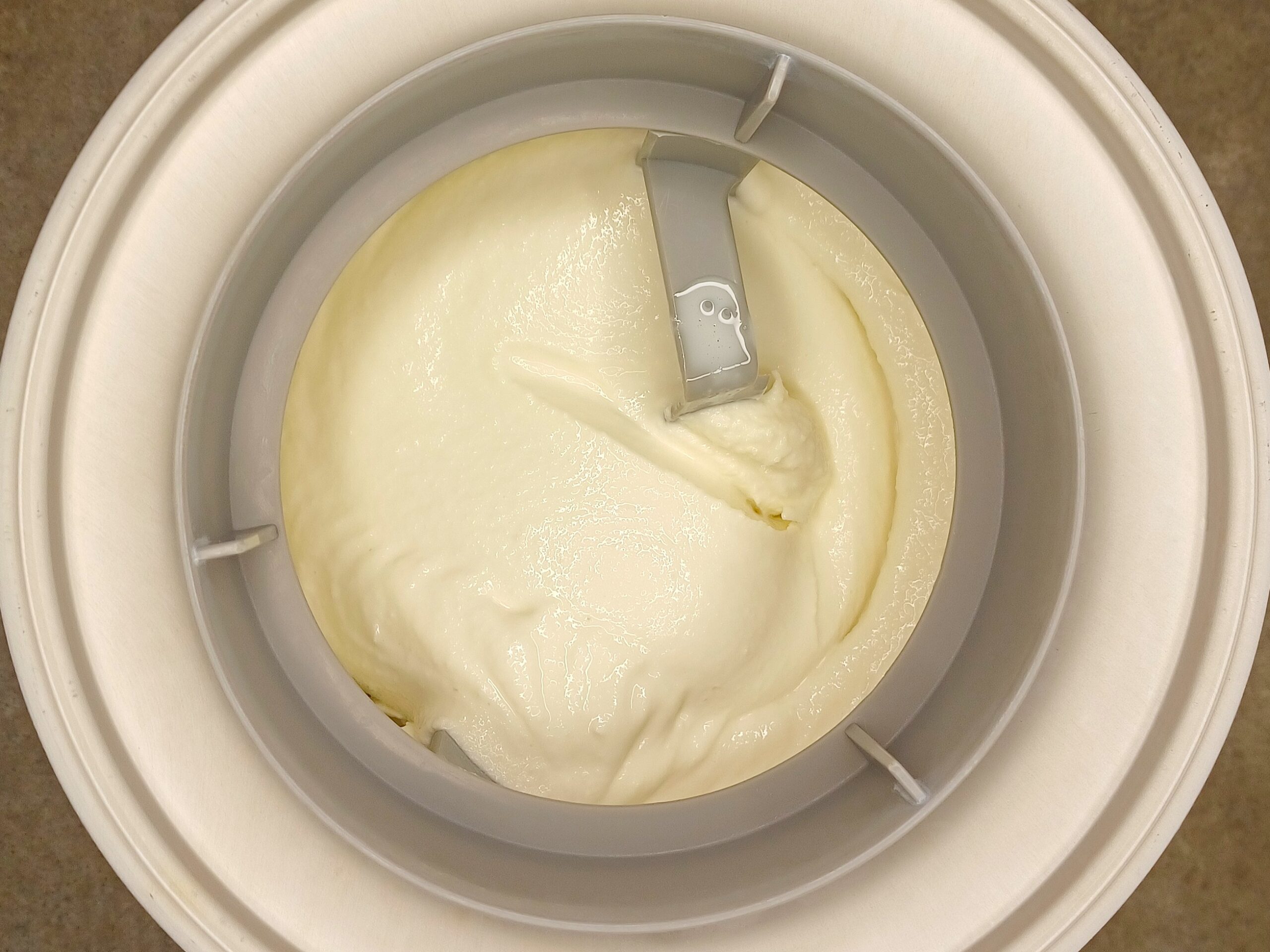
Set up your ice cream maker according to the manufacturer's directions. Pour your mixture into the ice cream maker and churn. In my machine the perfect churning time is 13 minutes, but your experience may vary.
The frozen yogurt is finished churning when it looks like soft-serve and is pulling away from the sides of the canister.
-
STORE
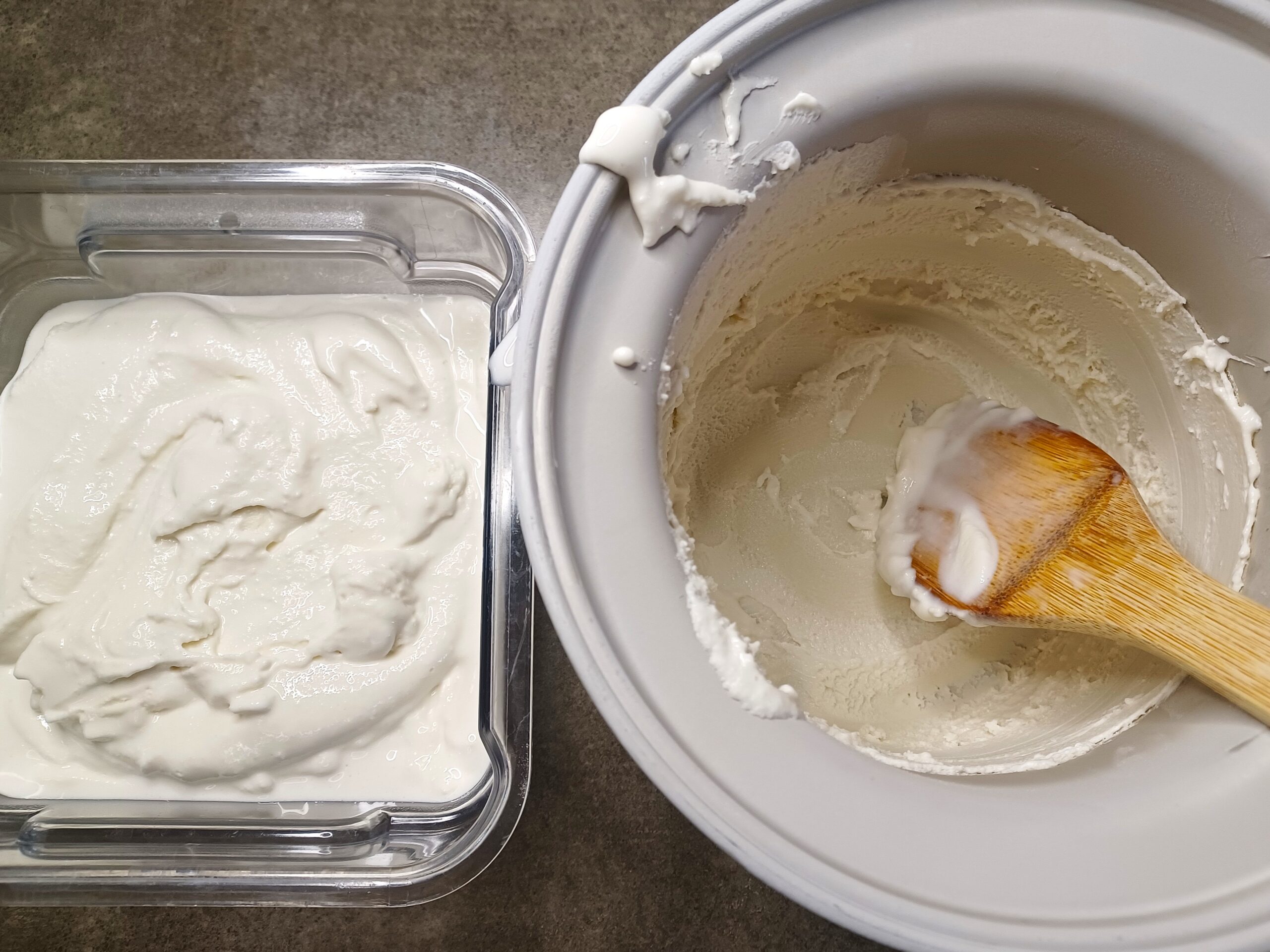
When the frozen yogurt has finished churning, scoop it as quickly as possible into your storage container. Cover it with plastic wrap or parchment paper, if using. (Placing a sheet of parchment paper between the container and lid will help prevent frost, or you can press plastic wrap directly onto the surface of the frozen yogurt.) Put the container in the freezer. The frozen yogurt will be fully firm in a few hours.
Note
You can use any unflavored, unsweetened protein powder you want. Whey, collagen, and egg white work the best. Vegan protein powders can work too, but sometimes create a chalky texture. Because different protein powders have different textures, the same volume of different powders may weigh different amounts. Weighing is the best method for ensuring you get the 65 grams the recipe calls for, but here are some estimates for using a cup measurement:
- 65 g collagen powder = 1/2 cup + 2 tablespoons
- 65 g whey protein = 1 scant cup
- 65 g egg white protein = 3/4 cup
- 65 g soy protein = 1 cup
- 65 g pea protein = 3/4 cup
Recommended equipment: (may include affiliate links)
- My ice cream maker (2 qt)
- Newer version of my ice cream maker (2 qt)
- Well-reviewed less expensive ice cream maker (1.5 qt)
- Insulated ice cream container
- Heat-proof spatula
- Immersion/hand blender
- Standard blender
- Ice cream scoop
- Measuring cups
Recommended ingredients: (may include affiliate links)